
Running a Sex Offender Check in Kitsap County
The official public route is the Washington Sex Offender Public Registry, often called WASOR. The Washington Association of Sheriffs and Police Chiefs maintains the public system, Washington State Patrol maintains the central registry, and the Kitsap County Sheriff's Detective Division handles local registration and notification. Each office has a distinct role.
Use the Kitsap County search for Washington-published profiles, then use the national portal when a name or address may cross state lines. The registry is free and normally needs no account. Search results are not a full criminal history or a live warrant check. Courts and WATCH provide separate case and disposition information, while KCSO receives local registration updates and profile corrections.
Kitsap County Sex Offender Registration
KCSO's Detective Division is the Kitsap County registration contact at 614 Division Street in Port Orchard. The published registry contact is 360-337-5613, Detectives Administration is 360-337-7110, and the sheriff's main number is 360-337-7101. Call before appearing because the reviewed official material does not publish appointment hours or a registration fee.
KCSO Detective Division
614 Division Street
Port Orchard, WA 98366
360-337-5613
Call to confirm registration arrangements
A person registers with the Kitsap County sheriff when the county is the place of residence and, for certain nonresidents, the place of school, work, or vocation under RCW 9A.44.130. KCSO forwards registration information, fingerprints, photographs, risk level, and address changes to WSP. The sheriff's role does not make every registration record public.
Searching the Washington Sex Offender Public Registry
WASPC's registry information page links Washington users to the official Kitsap County public search and explains disclosure. The live portal rate-limited automated review during research, so only verified controls are described. Do not assume an unverified ZIP radius, distance, or alert option exists.
- Open the official Washington registry and review its terms for lawful use.
- Choose In Your Area for an address-based map, enter a name, or browse published profiles by city.
- Check the Published, Non-Compliant, and Incarcerated lists when those categories fit the search.
- Open a matching profile, compare identity and location fields, and use Submit a Tip or Correction for specific information.
| Control or mode | Type | Required | Verified use |
|---|---|---|---|
| In Your Area | Geocoded map search | Unspecified | Returns an address-based map or list |
| Name | Text search | Unspecified | Finds a specific published registrant |
| City | Browse or search | No | Lists published profiles by city |
| Published Offenders | List | No | Shows the public registry population |
| Non-Compliant Offenders | List | No | Separates published noncompliance entries |
| Incarcerated Offenders | List | No | Separates incarcerated entries |
The official WASPC information screen provides the state context for Kitsap County sex offender searches.
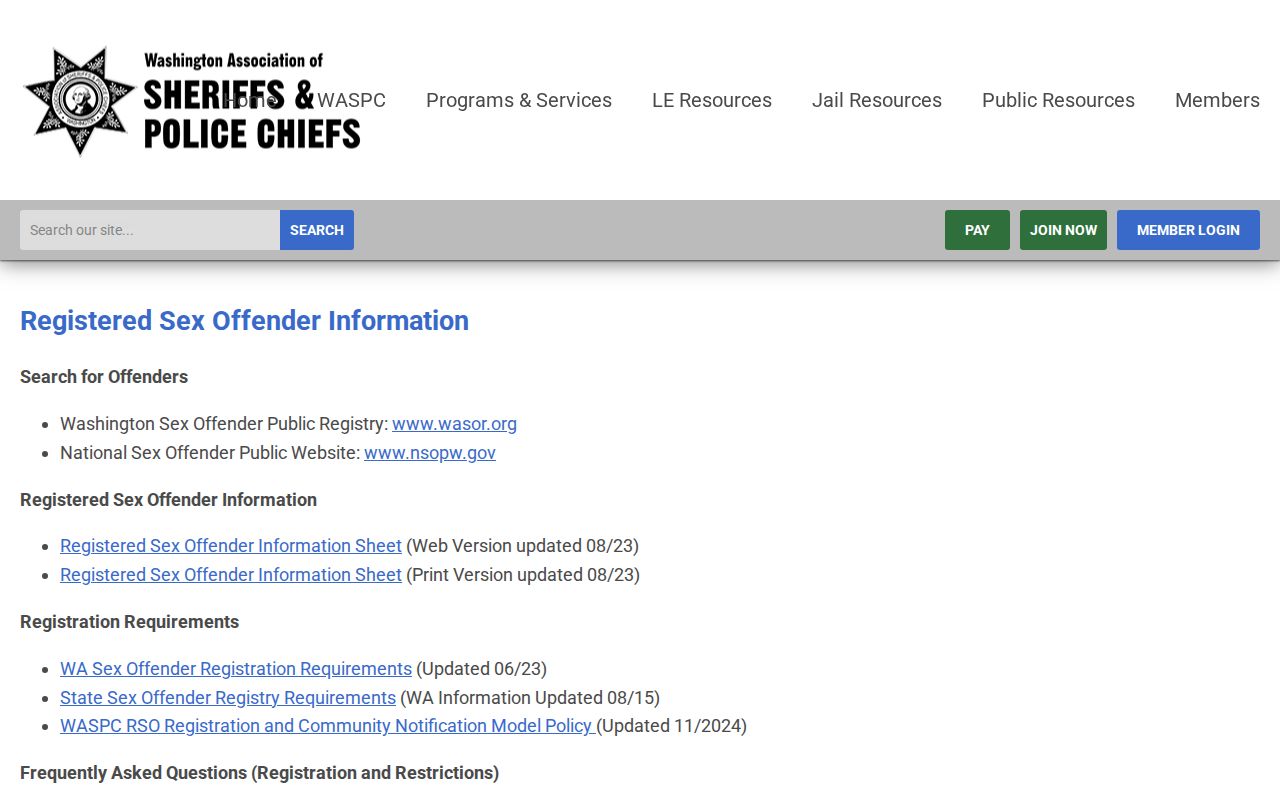
That state layer explains why Kitsap County registration and the public web display are related but not identical functions.
Kitsap County Level I Registry Limits
A blank Kitsap County public name or map result does not prove that no registration duty exists. Under RCW 4.24.550, all Level II and Level III registrants are published online. A Level I registrant generally appears only when noncompliant or when no fixed residence is reported. Registered kidnapping offenders are also part of the public system.
Kitsap County Level I status means lower assessed community risk. It is not a finding that no risk exists, nor is it a duration category. Search the public registry for the records Washington law permits it to show. For a specific correction or suspected failure to register, use the profile tip action or contact KCSO rather than trying to infer private data from an absent result.
Note: Registry absence can reflect Washington disclosure rules, not the absence of a Kitsap County registration duty or a prior qualifying case.
What a Registry Profile Shows
A Kitsap County Level III profile follows Washington's public minimum: the name, relevant convictions, address at hundred-block detail, a physical description, and a photograph. The reviewed WASPC and KCSO material also supports aliases, risk level, compliance status, registered or transient location, offense names, conviction jurisdiction, and a tip or correction action.
| Name & Aliases | Published identifying names that help distinguish the correct profile. |
|---|---|
| Photo & Physical Description | A registry image and physical descriptors used for identification. |
| Registered Address | Location shown at hundred-block granularity, or transient or no-fixed-residence status. |
| Offense Information | Relevant conviction names and the jurisdiction associated with them. |
| Risk Level | Washington's Level I, II, or III community-notification assessment. |
| Registration Status | Registration or compliance information supported by the public system. |
Employer, school, vehicle, tattoo, victim age, and supervision fields were not verified in a consistent Kitsap County public portal view and should not be expected. A hundred-block address identifies a general block, not an exact doorway, live position, or guaranteed current presence.
Kitsap County Sex Offender Cross-State Search
WASOR is the right first source for Kitsap County records. The National Sex Offender Public Website adds a federal search layer across participating state, territorial, and tribal registries. It is useful when a person recently moved, a known address is near a border, or the relevant conviction or registration may be outside Washington.
NSOPW does not replace KCSO. Local deputies handle Kitsap County registration, changes, classification work, and tips. Likewise, the national site cannot turn a nonpublic Washington Level I record into a public profile. Check the source jurisdiction listed in a result and follow its own disclosure limits.
The Department of Justice's national registry search capture shows the cross-jurisdiction entry point.
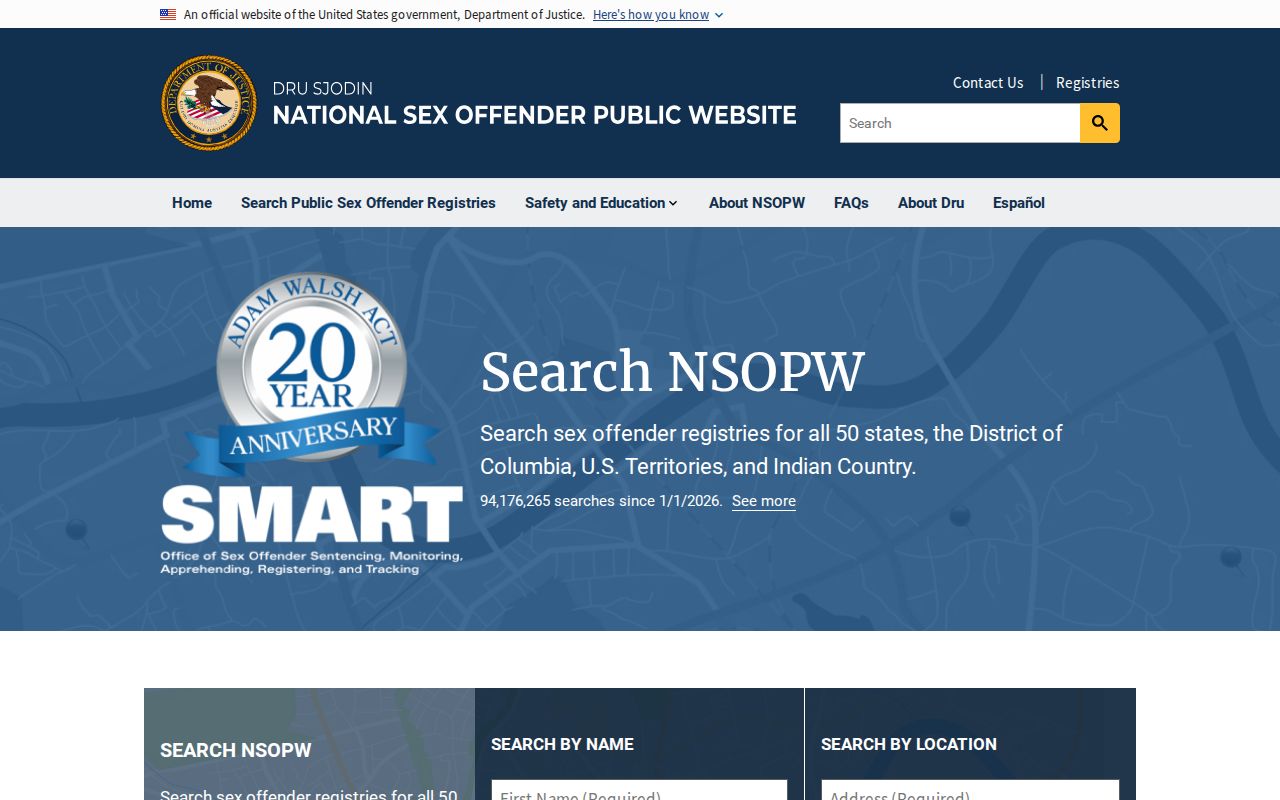
Use it as a supplement when the safety question extends beyond Kitsap County or Washington.
Note: A national result should lead back to its source registry before anyone relies on the listed Kitsap County sex offender details.
Registration Requirements and Levels in Washington
Kitsap County notification uses Washington risk levels to govern the scope of public notice. They do not set the registration period. Level II reflects moderate assessed community risk, and Level III reflects high assessed risk. A transient or no-fixed-residence status is not a fourth risk level; it permits broader notice because ordinary address-based notice is not practical.
| Risk level or status | Public treatment | Effect on duration |
|---|---|---|
| Level I | Normally limited disclosure; generally absent from WASOR unless noncompliant or without a fixed residence | None; conviction class and history control duration |
| Level II | Notice to named community organizations and neighbors, plus WASOR publication | None; risk does not set the registration term |
| Level III | Public-at-large notice and WASOR publication | None; risk does not create a lifetime term |
| Transient or no fixed residence | Broader authorized notice because an address-based approach does not work | Not a risk level and does not set duration |
KCSO and WSP apply the statutory registration and notice system. The official sources reviewed did not establish a blanket Kitsap County or statewide school-distance rule. The sheriff cannot choose a residence merely from registry status.
Kitsap County Sex Offender Duration
For Kitsap County registration length, RCW 9A.44.140 ties the term mainly to conviction class, prior qualifying history, jurisdiction, and age in qualifying juvenile cases. Counted community years must satisfy statutory conditions. A reader should not use the risk level shown on a profile to estimate an end date.
- Indefinite
- Washington adult Class A, qualifying prior registration, and federal, tribal, or out-of-state convictions unless statutory relief applies.
- Fifteen qualifying community years
- Adult Class B with no qualifying prior.
- Ten qualifying community years
- Adult Class C or named related offenses or attempts with no qualifying prior.
- Lifetime
- A sexually violent predator remains subject to lifetime registration.
- Three years
- A current qualifying juvenile Class A offense committed at age 15 through 17.
- Two years
- Other qualifying juvenile registration.
The Kitsap County sequence is not a countdown from the risk label. Statutory relief and qualifying community time require review of the conviction and registration history under current Washington law.
Note: Confirm any projected Kitsap County sex offender registration end date with the sheriff or qualified counsel, not a public risk label.
Kitsap County Registry Tips
Use Submit a Tip or Correction from the relevant registry profile when an address, identity detail, or compliance fact appears wrong. Give specific, firsthand information. KCSO can assess a Kitsap County registration issue, while 911 is reserved for an emergency. The public should not investigate, confront, or publish its own accusation.
A Kitsap County registry profile is also not a warrant search. Noncompliant status concerns registration duties, but the existence and service status of a warrant belong to law enforcement and the issuing court. When case history matters, locate the official Washington court file or use WATCH within its public scope.
The official Kitsap County channels preserve a clear record of the tip and allow trained staff to compare it with registration data. That process protects community safety without turning an online profile into a verdict about new conduct.
Lawful Use and Community Notification
The Kitsap County registry supports awareness and practical safety planning. Washington's disclosure system gives broader notice for higher assessed risk and for transient circumstances where an address-based notice cannot work. It does not authorize retaliation. Treat location information as a public-notice aid, respect the published level of detail, and send corrections to law enforcement.
WASPC and KCSO warn that threats, vandalism, intimidation, and harassment may lead to prosecution. The statutory source for Washington public sex-offender disclosure is RCW 4.24.550. Emergency danger belongs with 911; nonurgent suspected noncompliance belongs with the registry tip tool or KCSO.
Registry misuse is a crime: Do not use Kitsap County registry information to harass, threaten, intimidate, or commit vandalism. Washington's disclosure law, RCW 4.24.550, does not authorize vigilantism, and misuse can result in prosecution.